
Long Term Investing

I hope you all had a great weekend and enjoyed your Monday.
Today was a pretty uneventful day in the market so I’m going to spend this article discussing long term investing, my long term holdings, my quick thesis’, and names I’m watching for potential adds going forward.
Does long term investing mean you never sell, no matter what? No. It just means long term, not forever. It can mean forever, but it doesn’t have to.
My trading and investment philosophy is simple. I use a percent of my trading profits to fund my longer term account. I know many traders don’t believe in having a longer term investment account but I personally believe in having one. Trading keeps me sharp, in tune with the market, and engaged. Holding companies longer lets me participate in the potential longer term growth story of stocks I enjoy following.
If you want to catch gains like the ones we always hear about from people who bought Tesla, Nvidia, Apple, Microsoft, Google, or even non tech names like Caterpillar, John Deere, or Walmart long ago and are up thousands of percent, you have to hold stocks longer. How many times have you heard someone say, “I owned that stock but I sold it too early”? Probably countless times. The people who made those life changing returns didn’t flip in and out every few months. They bought companies they understood, believed in, and let compounding work in the background. Look at the chart of the NASDAQ below.
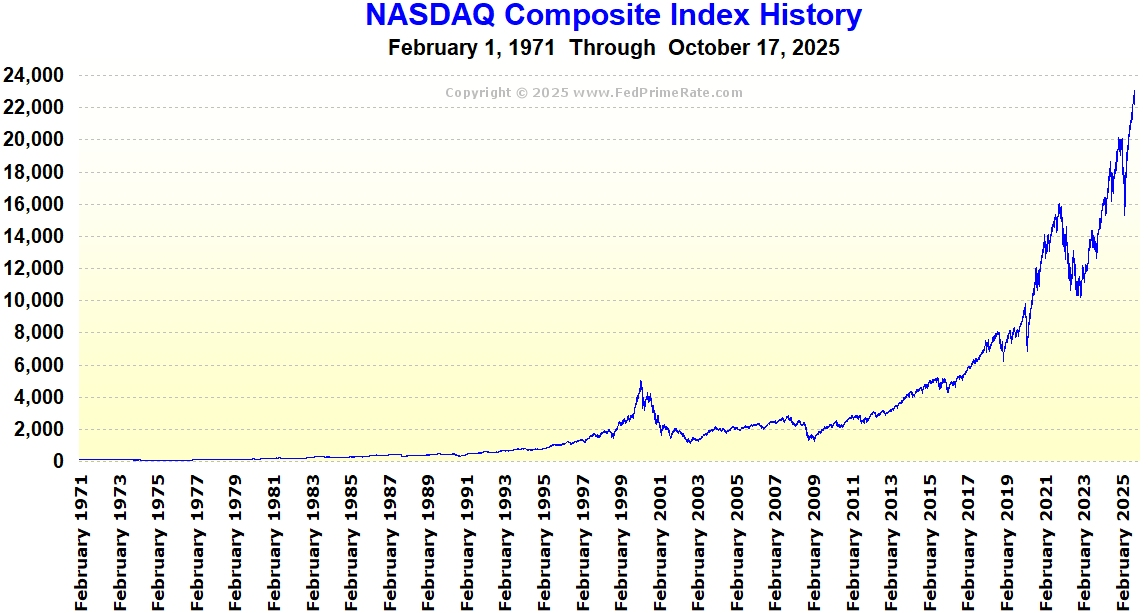
That looks like a long term trend I want to be part of. Everyone wants the next major winning stock but no one wants to hold it for longer than a week. The reality is most of those multi year moves come from just holding quality companies that continue to execute. It’s boring, slow, and it doesn’t give you that dopamine hit we chase but it works. That’s why I like having a portion of my net worth in a basket of names that I genuinely believe in. Companies that are fundamentally strong, have a real place in our future, and are shaping the way society functions.
When I evaluate a company for a potential long term holding, I always start with a few simple questions. Is there a real long term use case for what they’re doing? Are they a pioneer or leader in their space? Does their product or offering save time, money, make life easier or better, or improve efficiency in a way that can scale? Is the product great? Do they have loyal or passionate customers? Even if a company isn’t profitable yet, do their margins and revenue growth suggest they can get there?
Remember, buying stocks before they’re consensus often means there will always be a bear case. The biggest winners are almost never obvious at first. If they were everyone would own them.
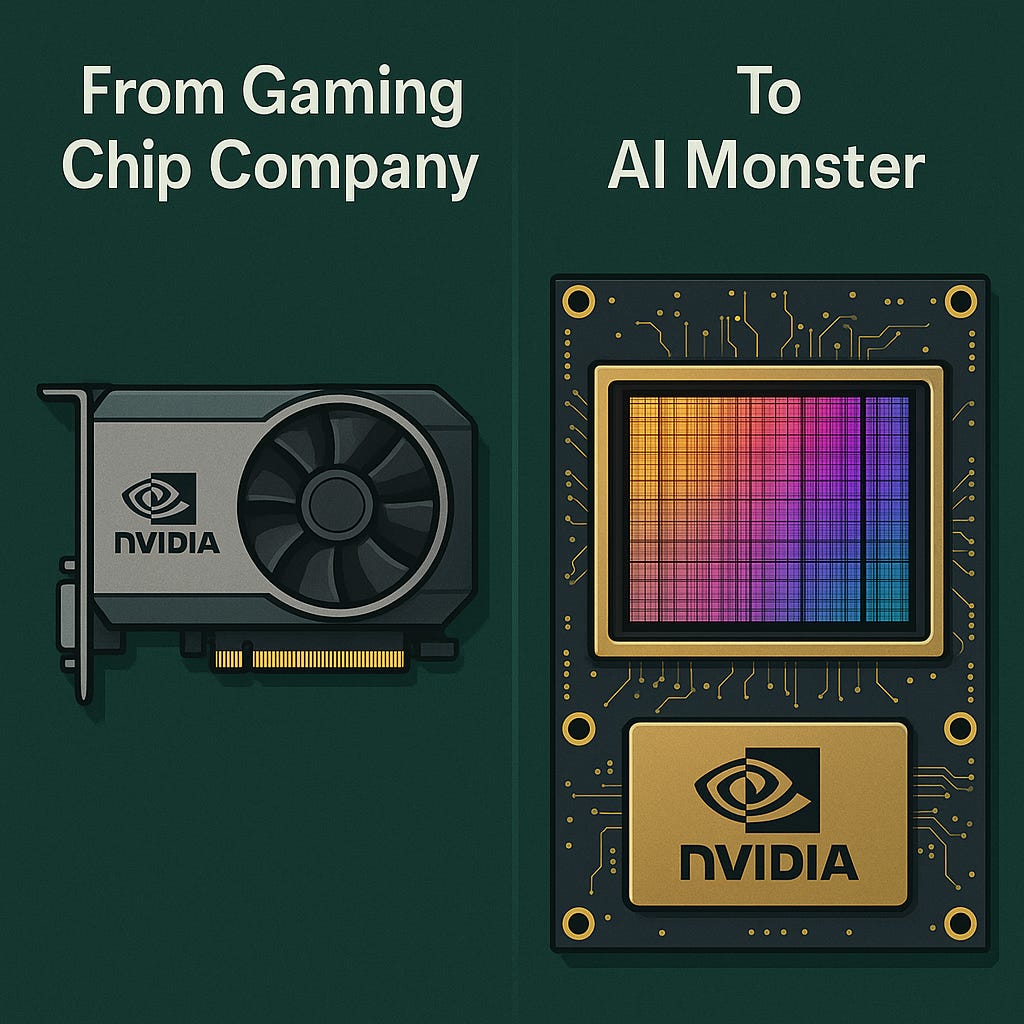
Some of the best companies evolve far beyond their original business. Think about a company like Nvidia which started as a gaming chip manufacturer and became the backbone of AI infrastructure. Or Shopify which began as a small e-commerce platform and grew into a massive ecosystem for online businesses. Those transformations weren’t predictable and obvious from day one. If they were everyone would have owned them. These transformations came from strong execution, great leadership, and the ability to keep innovating. The best compounders reinvent themselves again and again. Most companies don’t!
This ties into one of the best lessons Stanley Druckenmiller ever taught: don’t invest in the present. It doesn’t matter what a company is earning today or what it earned last quarter. The market is forward looking. You have to visualize where things will be 12 to 18 months from now. If you invest based on the present, you’re already behind. Forget what’s being said on X or the news about yesterday’s earnings. Ask yourself what the company’s situation could look like a year and a half from now. What does their guidance say? If the future looks significantly stronger than today and the stock is cheap relative to that future, you could have found yourself an opportunity.
This is exactly how Druckenmiller was able to make so much money riding the Nvidia move. Don’t forget, Druckenmiller was one of the first to buy Nvidia due to the AI thesis a few years ago. He wasn’t buying it for what it was as a gaming chip company, he was positioning for what it could become. He saw where the world was heading before the rest of the market caught on. Everyone else was focused on short term valuation or worried about how “expensive” it looked while Druckenmiller was focused on the the shift toward AI infrastructure, data centers, etc
His vision and patience is what ties directly into compounding. Compounding returns are simply growth on top of growth which is the process of your gains generating more gains. Put in $10,000, it turns into $15,000, and now you’re generating gains on $15,000, not just your original $10,000. That’s how compounding works. Your profits start making their own profits and over time the numbers get ridiculous. It’s slow at first but the longer you let it run the faster it builds. The sooner you put your money to work the sooner that snowball begins rolling. Everyone’s heard the phrase “let your money work for you” but few actually give their money enough time to do it

Let me preface this by saying about 70% of my net worth is in my trading account. I believe swing/position trading provides opportunities to compound capital faster but I also want to own a few stocks for the long term and have the chance to look back years from now with great cost basis’ on great companies the same way some people do with names like Apple, Nvidia, Microsoft, etc. when they were in the single digits.
My main long term investing account I often refer to is a portfolio made up of growth and tech companies and my Roth IRA. I also have an account where I hold a Vanguard index fund (VTI) that I add to every single week no matter what the market is doing. On top of that, I own both Bitcoin and Ethereum. I don’t trade them, I don’t touch them, and I only buy during periods of extreme selling. I have no plans to sell my crypto.
Now that we discussed my long term investing philosophy, let’s talk about my longer term holdings.